
Ever hit “send” on an English email and immediately wonder, Did that sound too direct? Too vague? Too awkward?
You’re not alone. English email writing in Japan is more than just translating your thoughts—it’s about navigating tone, etiquette, and clarity across cultures. In today’s global business world, mastering this skill can open doors, build trust, and set you apart.
It has even survived the whole AI rage up until now. Clearly the future of emails is still looking pretty good and stable, which is why, understanding how to write them well in English, can elevate you to international standards. Understanding how to write effective English emails is just one part of succeeding in international business.
The truth is that, email writing is just a part of the global business scope, there is more that goes into making emails sound professional and smart. I recommend building strong global relationships, mastering cultural norms and etiquette. As we get ready to dissect this article about emails, check out our in-depth guide on Mastering Global Business Etiquette: A Japanese Professional’s Guide to Success in English-Speaking Countries.
It covers essential tips for meetings, greetings, dress codes, and communication styles that will help you thrive in any English-speaking business environment.
For now, let’s get back to a very crucial part of business, EMAILS! Any Japanese business professional worth his salt knows how crucial it is to write effective emails in English so as to foster international relationships and ensure clear communication.
Here are some English email writing tips for Japanese business professionals;
English Email Writing Tips
1. Understanding Cross-Cultural Communication
Japanese business culture emphasizes hierarchy, formality, and indirect communication whilst western business culture and email etiquette often prioritizes clarity, brevity, and directness.
Effective English email communication for all Japanese professionals starts with understanding the cultural differences between Japanese and Western business practices.
Key Points:
- Adapt to the Audience: For your international colleagues, use a more direct and concise tone while maintaining politeness. For example, “Could you confirm the schedule?” works better than a long, indirect question.
- Respect Hierarchy: In English, using appropriate titles and honorifics remains an essential way to demonstrate respect and professionalism. Addressing someone correctly, such as “Dear Mr. Smith,” not only acknowledges their position or role but also sets a polite and formal tone for the email.
This practice aligns with international standards of business etiquette, ensuring that your message is well-received and fosters a positive impression. Taking the time to address recipients properly shows attention to detail and cultural sensitivity, both of which are highly valued in global business interactions.
- Balance Formality: It is wise to match your tone to the recipient’s level of formality. Use “Best regards” for a professional closing, but adapt to “Kind regards” or “Thanks” for casual relationships. The ability to adjust your closing not only enhances the appropriateness of your message but also fosters better rapport with your recipient.
2. Structuring an English Email
It goes without saying that a well-structured email is easier to read and ensures your message is clear. Follow this format:
a. Subject Line
The subject line should always be specific and informative. You will be setting the tone and clearly showing the purpose of the email.
- Good: “Proposal Review: Feedback Needed by March 31”
- Poor: “About the Proposal”
b. Opening Greeting
It is imperative to begin with a polite and professional salutation every time, this is easy for Japanese professionals as politeness is ingrained in Japanese culture:
- “Dear Mr. Tanaka”
- “Hello Ms. Smith”
- “Hi Team” (for group emails)
c. Introduction
You should always state the purpose of your email clearly in the first sentence:
- “I am writing to confirm our meeting schedule.”
- “Thank you for your email regarding the project timeline.”
d. Main Body
This is the meat of the burger so to say, therefore organize the content into clear sections:
- Purpose: Explain why you are writing.
- Request or Action: Clearly state what you need from the recipient.
- Details: Provide necessary background or context.
e. Closing
Any written work without a good closing usually looks unfinished. So end with a polite closing remark:
- “Thank you for your assistance.”
- “I look forward to your response.”
f. Signature
Include your full name, title, company, and contact details for professionalism and clarity. You want everyone in the email to know who sent it and all your details in case anyone may want to reach out separately or confirm anything later on.
3. Writing with Precision and Clarity
Clarity is crucial in all email communications. I remember one time someone sent me a very ambiguous email, where I even ended up thinking I had won some lottery of some kind. I know, I know! Crazy!

Terribly confusing to the point where I had to follow up with a call and request a second more clearer email. Nobody in business has enough time or patience for these kinds of emails. So communicate with precision and clarity each and every time, even if the communication may not be as pleasant as you hope.
Ambiguity can lead to misunderstandings, especially when communicating across cultures.
Tips for Clear Writing:
- Use Simple English: Avoid idiomatic expressions or overly complex sentences.
- Be Direct: Clearly state your main point early in the email.
- Organize Information: Use bullet points or numbered lists to make details easy to follow.
- Avoid Jargon: Unless necessary, avoid technical terms or industry-specific jargon.
Example:
Instead of saying, “Would it be possible for you to provide the data?” use, “Could you please send the sales data by Friday, March 31st?”
4. Maintaining Politeness and Professionalism
Politeness is a cornerstone of Japanese communication, as we have already established this far, and this should carry over into English emails. Thankfully, this is mostly natural for Japanese Business professionals. However, striking a balance between politeness and directness is where the quagmire lies;
Best Practices:
- Use courteous phrases such as “please” and “thank you.”
- Avoid overly casual language like “Hey” or “What’s up.”
- Show appreciation: “Thank you for your prompt response” or “I appreciate your feedback.”
Common Phrases:
- “Could you please…”
- “I would appreciate it if…”
- “Thank you in advance for…”
5. Handling Challenging Topics
Sometimes in business, challenging topics do come along, every once in a while. It is what it is. Sometimes it is downright unpleasant having to deal with some of them, but always remember, diplomacy is essential no matter what. More so when addressing sensitive issues or giving constructive feedback.
Steps for Tackling Sensitive Issues:
- Start Positively: Begin with a positive note or acknowledgment.
- State the Issue: Be factual and neutral.
- Propose a Solution: Offer suggestions to resolve the issue.
- Maintain Positivity: End on a constructive and polite note.
Example:
Subject: Feedback on Marketing Plan
Dear Ms. Lee,
Thank you for submitting the marketing plan. I appreciate the effort you put into it. However, I noticed a few areas that could be improved for better alignment with our goals. Could we schedule a meeting to discuss these points? Please let me know your availability.
Best regards,
[Your Name]
6. Proofreading for Perfection
You cannot begin to imagine how errors in grammar or spelling can detract from your professionalism. With so many tools available now for all Japanese Business professionals, this should never happen.

Even worse, such errors can twist the meaning of your content unintentionally. Personally, this is one of my pet peeves. Simply put; always proofread your emails before sending them.
Checklist for Proofreading:
- Are there any spelling or grammar errors?
- Are names, titles, and dates correct?
- Have you attached all necessary files?
- Does the email convey your message clearly?
- Is the tone appropriate for the recipient?
Of course, once in a while these errors do happen. When they do happen, apologize and resend the email – correctly this time or write a follow-up email immediately you notice the error, own it, and correct it right away!
7. Tailoring Emails for Global Recipients
An international audience is quite broad! Anyone can be nervous and unsure, so it’s ok to feel so. It however requires careful consideration of culture, language, and expectations. Once you master that, it becomes a breeze.
Key Considerations:
- Avoid Idioms: The Japanese language has many idioms that make a lot of sense in a business environment. It is part of the charm. Avoid them though when writing emails to an international audience. You need to adapt your communication style, build rapport, foster understanding, and leave a positive impression on your international colleagues and idioms are not the way to do so.
- Be Time-Conscious: Respect time zones when scheduling or expecting responses. Thankfully, Japanese culture is extremely punctual so this works well for you.
- Use Clear Formatting: Use headings, bullet points, and concise sentences to enhance readability.
Example:
Subject: Request for Updated Sales Figures
Hello Mr. Johnson,
I hope this email finds you well. Could you please share the updated sales figures for Q1 by Thursday, March 9? If you need additional time, please let me know.
Thank you for your support.
Best regards,
Yumi Sato
8. Leveraging Tools for Better Emails
I had mentioned at the beginning that errors are not excusable really, as there are too many tools to help you out now. Modern tools can simplify email writing and improve accuracy:
- Grammarly: Helps correct grammar and refine tone.
- DeepL or Google Translate: Useful for translating Japanese phrases into English.
- Scheduling Tools: Schedule emails to suit the recipient’s time zone.
- Templates: Create standardized templates for frequently sent emails.
Conclusion
It did take me a while to come up with these points, but the experience I have had working with some of the smartest Japanese business minds out there has come to my rescue. I hope they are useful as you learn more and practice more.
In a nutshell, to master the art of writing effective emails in English is a crucial skill for all Japanese business professionals working in the international market. It is not easy though, especially at first.
It becomes easier, however, when you recognize the cultural nuances, with the intention of crafting well-structured messages, emphasizing clarity and courtesy, while utilizing modern tools, then you can create emails that leave a strong, positive impression.
Eventually, you’ll not only refine your communication abilities across all business correspondence, but also strengthen your capacity to foster meaningful global business connections.
Your next English email doesn’t have to be stressful—it can be your secret weapon. With the right approach, Japanese professionals can write clear, professional emails that impress global colleagues and open new business opportunities.
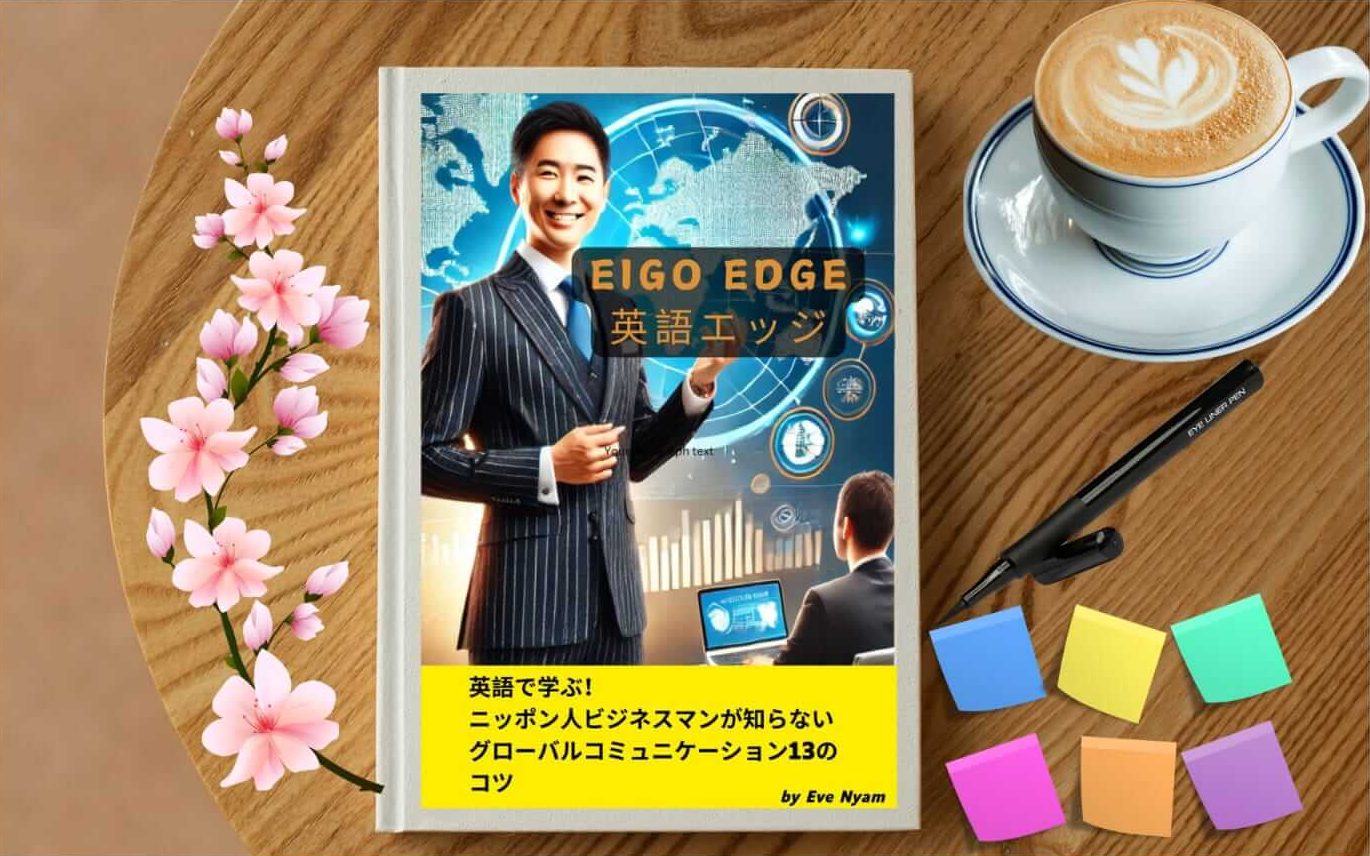
📘 Want to go deeper? Grab your copy of Eigo Edge for step-by-step guides, real examples, and cultural tips.
💌 And don’t forget to subscribe to our newsletter for weekly business English tips made just for Japanese professionals like you.
Your global success starts here.
Arigato Gozaimasu