
国際会議で成功するために日本人ビジネスマンが知っておくべき重要な英語フレーズ
10 Must-Know English Phrases for Japanese Professionals in International Meetings starts with this scenario: You’re sitting in a virtual meeting with colleagues from New York, London, and Sydney. You’ve got your coffee, your notes, your game face on. And then—someone says, “Let’s circle back to that later.”
Huh? Circle… back? Where are we going?
If you’ve ever silently panicked in an international business meeting, wondering what everyone just said (or what on earth you’re supposed to say), you’re not alone.
Many brilliant Japanese business professionals feel exactly the same way. You’re confident in Japanese meetings. You’ve got strategy, ideas, and leadership chops. But the moment the meeting switches to English… 😬 the pressure is real.
And guess what? It’s not your fault.
Business English in international meetings is a whole new language—filled with strange phrases, indirect expressions, and polite-sounding ways of saying “no.”
But here’s the good news:
- You don’t need to memorize thousands of English words or speak like a native speaker.
- You just need the right English phrases for international meetings—the ones that are actually used by real professionals in global business settings.
That’s what this guide is all about.
In this post, you’ll learn:
- 10 essential English phrases for international meetings
- The Japanese meanings behind them
- Natural, real-world examples you can use right away
- Cultural tips to avoid awkward moments (because yes, they happen!)
- How to sound fluent and confident—even if you’re still learning
From “Let’s get started” to “Let’s table this for now” (don’t worry, we explain that too), these phrases will help you shine in any global meeting—whether it’s a video call, a client pitch, or an internal discussion with your international team.
And yes—once you master these phrases, your next English meeting won’t just be survivable…
It might actually be fun.
Let’s dive into the 10 must-know English phrases for Japanese professionals in international meetings—and start leveling up your business English, one smart phrase at a time.
🧠 Why These English Phrases Matter in International Meetings
International business meetings in English can leave you with a migraine. One wrong word and suddenly you’re not just “a little unclear,” you’re the quiet one. The one who doesn’t speak up. The one who gets ignored.
But here’s the thing: it’s not about intelligence or experience.
It’s about communication—and more specifically, communicating in global business English.
English used in international meetings isn’t just about grammar and vocabulary. It’s about:
- Knowing when to speak (without interrupting)
- Knowing how to agree (without sounding robotic)
- Knowing how to clarify (without apologizing too much)
- And yes, knowing what to say when you have no idea what just happened 😅
🧩 The Power of Set Phrases
This is where set phrases come in.
Think of them like the “keigo” of business English—polished, respectful, and really useful in professional situations. These phrases are shortcuts to sounding confident, capable, and clear, even if your English level isn’t perfect.
Instead of worrying about what to say next, you’ll have go-to expressions ready for:
- Starting meetings
- Asking for clarification
- Politely giving your opinion
- Wrapping things up with style
And when you use the right phrase at the right time?
You sound fluent.
Not “textbook fluent.” Real fluent. The kind of English that gets you noticed and respected in global business settings.
🌏 Cultural Bonus: From Japan to the World
Let’s also acknowledge the culture gap.
In Japan, business meetings often feel like a well-choreographed kabuki performance—formal, polite, and carefully structured. But step into an English-speaking (especially Western) meeting, and suddenly it’s more like jazz: fast, informal, and occasionally a bit all over the place.
This difference creates stress for many Japanese professionals.
That’s why mastering English phrases for international meetings isn’t just about language.
It’s about building cultural fluency.
It helps you:
- Keep up in fast discussions
- Participate without second-guessing yourself
- Express ideas without fear of being “too direct” or “too rude”
And best of all—it builds confidence. Because the more you use these phrases, the more natural you’ll sound. And the more natural you sound, the more people will listen when you speak.
🗣️ Phrase 1: “Let’s get started.”
✅ What it means:
It’s the universal business phrase to officially kick things off. Like clapping your hands and saying, “Okay, Minna-san, hajimemashou!”—but in English, and with a bit less formality (and no one bows).
💼 When to use it:
Use this phrase at the very beginning of a meeting. It signals that the small talk is over, and it’s time to get down to business. Whether you’re the host, presenter, or just jumping in, this phrase sets the tone.
📍 Real example:
“Thanks everyone for joining today. Let’s get started with a quick update from the Tokyo team.”
🤓 Why Japanese professionals need this:
In Japan, we often wait for the most senior person to speak first. There’s a natural flow, a sense of order.
But in English-speaking meetings?
It’s more like a conversation buffet—everyone’s grabbing the mic as soon as it’s their turn.
Saying “Let’s get started” helps you take control (without sounding pushy), and shows that you’re confident, clear, and ready to lead—even if you’re just introducing the agenda.
😅 Common Mistake to Avoid:
Don’t say, “Shall we begin now?”
It’s grammatically fine but sounds a bit… dramatic. Like you’re about to perform a tea ceremony, not lead a budget review. Stick with the more natural “Let’s get started.”
🔄 Bonus Variations:
- “Let’s dive in.” (more casual, fun)
- “Shall we jump right in?” (friendly, conversational)
- “Alright, let’s kick things off.” (great for presentations or when you’re the host)
🧠 Japanese Equivalent:
「では、始めましょう!」or「そろそろ始めましょうか?」
Same meaning, just with a lot more bowing and silence before someone finally says it.
Next time you’re the first to speak in a Zoom meeting, take a deep breath, smile, and confidently say: “Let’s get started.”
It’s short. It’s sharp. It shows you mean business.
🗣️ Phrase 2: “Could you clarify that?”
✅ What it means:
This is the polite, professional way to say:
“Wait… nani? What did you just say?”
But without looking confused, panicked, or like you accidentally joined the wrong meeting.
💼 When to use it:
Use this when someone says something that makes your brain go full “kanji overload” mode. Maybe they spoke too fast, used a strange idiom, or just gave a super vague answer like “We’re pivoting toward scalable synergy” (😵💫).
📍 Real example:
“Sorry, could you clarify that last point about the budget increase?”
🤓 Why Japanese professionals need this:
In Japanese culture, we sometimes nod and say “Hai” even if we don’t 100% understand—especially when the person speaking is higher-ranked.
But in global business, guessing can be dangerous. (One wrong “yes” and suddenly you’ve approved a $2 million marketing campaign in Brazil.)
Using “Could you clarify that?” shows you’re engaged, professional, and care about getting things right. And it’s 100% okay to ask—it actually shows you’re a sharp communicator.
😅 Common Mistake to Avoid:
Avoid saying: “I don’t understand.”
It’s too direct and can sound negative or even insecure.
Instead, this phrase keeps things positive and focused on the idea, not your English level.
🔄 Bonus Variations:
- “Could you explain that a bit more?”
- “Just to make sure I understood, you mean…?”
- “Would you mind clarifying what you meant by…?”
🧠 Japanese Equivalent:
「もう少し詳しく説明していただけますか?」
or
「つまり、どういう意味でしょうか?」
See? You already do this in Japanese—it’s just time to do it in English with the same confidence.
So next time the conversation turns into a fast-paced game of Business-English bingo, remember this phrase.
Say it smoothly. Nod with purpose. You’ve got this.
🗣️ Phrase 3: “I’d like to add something.”
✅ What it means:
This is your go-to phrase for sliding into the conversation without crashing the verbal party. It’s like gently raising your hand… but in English and without the awkward pause.
💼 When to use it:
You’ve got a great idea. You’ve thought of a better way. Or maybe you just want to back up what someone else said (nice!). This phrase lets you politely enter the conversation, even if others are already talking fast or overlapping a bit (which they love to do 😅).
📍 Real example:
“I’d like to add something to what Sarah just said about the delivery schedule.”
🤓 Why Japanese professionals need this:
In Japan, speaking up—especially in front of seniors or a big group—can feel like seiza on a bed of nails.
But in English-speaking meetings, if you don’t jump in, people assume you have nothing to say. 😬
This phrase helps you speak up without being rude. It shows you’re engaged, collaborative, and confident—all without sounding too direct or pushy.
It’s a total giri and ninjo balance: respect for others, but also pride in your voice.
😅 Common Mistake to Avoid:
Don’t interrupt with “Listen!” or “Wait!”
You’re not starring in an American legal drama.
Stick with calm, respectful phrases like this one—it keeps the meeting smooth and earns you respect.
🔄 Bonus Variations:
- “I’d like to share a quick thought.”
- “If I may, I’d like to add something.” (super polite)
- “Just to add on to that…”
🧠 Japanese Equivalent:
「少し補足させていただきたいのですが」
or
「私からも一言よろしいでしょうか?」
Sounds familiar? You already know the feeling—now just switch to English and go for it!
Remember: your ideas matter.
Use this phrase like a business-level lightsaber—cut in smoothly, say your piece, and let your confidence shine.
🗣️ Phrase 4: “Let’s circle back to that.”
✅ What it means:
This is the business English version of, “Let’s come back to this later, but I don’t want to forget it.”
It sounds calm, cool, and in control—very manager level.
And no, you don’t actually need to walk in a circle. (That would be… confusing.)
💼 When to use it:
Someone brings up a great point—but it’s not the right time. Maybe you’re tight on time. Maybe it’s off-topic. Maybe your brain is still catching up from that 7 a.m. global Zoom call.
Use this phrase to politely pause the discussion without ignoring it.
📍 Real example:
“That’s an important point. Let’s circle back to that after we go through the quarterly numbers.”
🤓 Why Japanese professionals need this:
In Japan, it’s common to just… not respond to something awkward or off-schedule. Silence does the job.
But in international meetings?
That silence might read as “they didn’t care” or worse, “they forgot.”
This phrase shows you’re listening, managing the flow, and being considerate—all at once.
It’s like a verbal aikido move: redirect the energy, stay balanced, and come back when ready.
😅 Common Mistake to Avoid:
Avoid saying “Let’s ignore that for now.” 😬
Sounds dismissive, even if you didn’t mean it that way.
“Circle back” is the magical phrase that keeps everyone feeling heard and respected.
🔄 Bonus Variations:
- “Let’s come back to that in a moment.”
- “We’ll revisit that after this section.”
- “Can we put a pin in that and return to it?”
🧠 Japanese Equivalent:
「それについては後ほど話しましょう」
or
「一旦保留して、後でまた戻りましょう」
Same idea—different language, same good intentions.
So next time someone derails your meeting agenda with a random announcement about office chair budgets, don’t panic.
Just smile and say, “Let’s circle back to that.”
Your inner kaizen master will be proud. 💪
🗣️ Phrase 5: “Just to clarify…”
✅ What it means:
This phrase is the smooth way of saying,
“Before I make a huge mistake, let me double-check what you meant.” 😅
It lets you ask for confirmation without sounding unsure or confused.
Think of it as the English-business equivalent of checking the meeting minutes twice before you hit ‘send’.
💼 When to use it:
When you want to confirm details, instructions, or expectations—without accidentally agreeing to ship 10,000 units to New Jersey instead of Nagoya.
This phrase makes you sound thoughtful, precise, and careful—which is basically every Japanese manager’s dream.
📍 Real example:
“Just to clarify, are we launching the campaign next Monday or the following one?”
🤓 Why Japanese professionals need this:
In Japanese culture, it’s common to read the air—察する. You try to understand based on subtle cues.
But in global business?
If you guess and get it wrong, it’s on you.
“Just to clarify…” is your perfectly polite escape hatch. You’re not saying “I didn’t understand.” You’re saying “I care enough to make sure I got it right.”
Win-win.
😅 Common Mistake to Avoid:
Saying “What does that mean?”
It can sound a little… blunt. Maybe even a tiny bit aggressive (uh-oh).
“Just to clarify…” makes you sound proactive and respectful.
🔄 Bonus Variations:
- “Just to make sure I understood…”
- “So, to clarify, we’re aiming for Q3 delivery?”
- “If I understand correctly, you’re saying…”
🧠 Japanese Equivalent:
「確認ですが…」or
「念のためですが…」
You’re already using this logic in Japanese—so just say it in English and keep on rocking.
Clarification isn’t weakness—it’s a secret strength.
Use this phrase like a pro, and you’ll avoid miscommunication while earning points for being sharp and detail-oriented.
🗣️ Phrase 6: “I completely agree.”
✅ What it means:
You’re saying: “Yes, I’m 100% with you on this.”
This phrase is full of support, energy, and positive vibes—no slow head nods or silent approvals here!
It’s like the English version of saying 「まったくその通りです!」but with a little corporate sparkle.
💼 When to use it:
Use this when someone says something you agree with, especially in meetings, brainstorming sessions, or during a heated “Should we use Teams or Slack?” debate.
Saying “I completely agree” helps you build rapport, show you’re listening, and add momentum to the discussion.
📍 Real example:
“I completely agree with Hiroshi’s point about needing more data before we proceed.”
🤓 Why Japanese professionals need this:
In Japan, you might just nod silently or say “Sou desu ne…”
But in Western meetings, silence = disagreement or disinterest. 😬
Using this phrase shows you’re engaged, supportive, and part of the team. Plus, it gives you a chance to lead into your own opinion—Japanese harmony meets Western assertiveness. 👏
😅 Common Mistake to Avoid:
Don’t just say “Yes” with no context.
It might seem too flat—or worse, confusing if you’re agreeing with a complicated idea.
“I completely agree” is crystal clear. Confident. Warm. Professional. Just like a really good cup of matcha. 🍵
🔄 Bonus Variations:
- “Absolutely, I agree with that.”
- “I’m on the same page.”
- “I totally agree with your point.”
🎯 Pro Tip: Follow it up with your own idea!
“I completely agree—and I’d also suggest we run a quick A/B test to confirm.”
Boom. Collaboration + leadership = Eigo Edge unlocked.
🧠 Japanese Equivalent:
「まったくその通りです」
「私もそう」
🗣️ Phrase 7: “We need more time to decide.”
✅ What it means:
Basically: “Whoa there, cowboy. Let’s not rush this.” 🤠
This phrase politely puts the brakes on sudden decisions, without sounding like you’re avoiding responsibility.
💼 When to use it:
Use it when someone asks your team for a quick answer—but you know it needs more discussion, more data, or definitely more time to ask your boss.
Because sometimes, decisions need to go up the food chain. 🐟➡️🦈
📍 Real example:
“Thanks for the proposal. We need more time to decide on the budget allocation.”
🤓 Why Japanese professionals need this:
Let’s be honest—Japan doesn’t do “instant decision culture.”
We prefer consensus, harmony, nemawashi.
But in English-speaking workplaces, silence = uncertainty. 😐
Saying “We need more time to decide” shows leadership, transparency, and professionalism. It tells them:
➡️ You’re thinking carefully.
➡️ You’re taking it seriously.
➡️ You’re not ghosting them.
Perfect harmony between Japanese business wisdom and Western communication expectations.
😅 Common Mistake to Avoid:
Avoid saying: “I don’t know yet.”
It sounds unsure, and it may weaken your position.
Instead, “We need more time to decide” sounds intentional, organized, and totally in control.
🔄 Bonus Variations:
- “We’ll need to review this internally first.”
- “Let us take some time to consider the options.”
- “We’d like to revisit this after further discussion.”
🎯 Bonus Play: Follow it with a time frame:
“We need more time to decide—can we follow up by next Tuesday?”
Now you’ve got a reputation as a decision-maker, not a decision-avoider.
🧠 Japanese Equivalent:
「社内で検討させていただきます」
「もう少し時間をいただけますか?」
「判断には時間が必要です」
You already say this in Japanese every day. Now you can say it in English without breaking a sweat!
Decisions made in a rush often lead to regret.
Use this phrase to buy time, build consensus, and show that your decisions are always thoughtful—and backed by a whole squad of omotenashi-level thinking.
「思います」
「同感です」
You’ve already mastered this feeling—now you’re just delivering it in English, boardroom-style.
In a world of loud opinions, being supportive is powerful.
“I completely agree” shows you’re a team player, not just a listener. And if you use it well… they’ll start agreeing with you, too. 😉
🗣️ Phrase 8: “Let’s take this offline.”
✅ What it means:
Don’t worry, you’re not sending anyone back to the analog era.
This just means:
“Let’s stop discussing this here, and continue it privately—after the meeting.”
Kind of like saying, 「この話は後で二人でしましょう」but with digital-age swag.
💼 When to use it:
Use this when a topic is going off track, getting too detailed, or only relevant to a few people in the room.
This phrase protects time, keeps meetings focused, and avoids awkward drama in front of the whole team.
📍 Real example:
“That’s a great point. Let’s take this offline and follow up one-on-one.”
🤓 Why Japanese professionals need this:
In Japan, it’s common to stay quiet in a group and resolve conflicts behind the scenes.
Guess what? Westerners do that too!
Only they say it out loud—and use “Let’s take this offline” to steer the conversation smoothly.
This phrase is a ninja move 🥷:
✅ No one feels shut down
✅ You save time
✅ You stay in control of the meeting
😅 Common Mistake to Avoid:
Don’t say: “Let’s stop talking about this.”
Oof—that sounds rude or defensive.
“Take it offline” is the elegant way to pause without offending.
🔄 Bonus Variations:
- “Let’s continue this after the meeting.”
- “Can we follow up separately?”
- “We’ll handle this one-on-one later.”
🎯 Secret Bonus Move: Use it to avoid public confrontation if things get spicy 🌶️ in the meeting.
“You both bring good points—let’s take this offline and find a solution together.”
Boom. Instant peacekeeping.
🧠 Japanese Equivalent:
「後ほど個別で相談しましょう」
「この件については別途ご相談させてください」
Yup. You’ve been using this concept all along—now it’s just imported into English with full global professionalism.
The strongest leaders know when to speak—and when to hit pause.
“Let’s take this offline” is how you guide conversations with grace, precision, and maximum respect.
🗣️ Phrase 9: “Could you walk me through that?”
✅ What it means:
This is the polite, professional way to say:
“Can you explain that to me step-by-step?”
You’re not saying “I don’t get it.”
You’re saying:
➡️ “I’m interested.”
➡️ “I want to understand fully.”
➡️ “Let’s go over it together.”
It’s like 「もう少し詳しく教えていただけますか?」—but with that smooth English finesse.
💼 When to use it:
Use this when someone explains a process, proposal, or technical topic that needs more detail.
Especially helpful in presentations, emails, or when you’re on Zoom wondering what just happened.
📍 Real example:
“Could you walk me through that timeline again, just to make sure we’re aligned?”
🤓 Why Japanese professionals need this:
In Japanese culture, sometimes we hesitate to ask questions.
We don’t want to look unprepared or disrespectful.
But in Western business? Asking questions shows you’re engaged and proactive.
“Could you walk me through that?” is the magic phrase that makes you sound curious, capable, and ready to learn—all without ever sounding clueless.
😅 Common Mistake to Avoid:
Avoid saying: “I don’t understand.”
It’s a bit too blunt, and can sound passive or negative.
Instead, “Could you walk me through that?” puts you in the driver’s seat. You’re not lost—you’re leading the understanding process.
🔄 Bonus Variations:
- “Can you walk me through the steps again?”
- “Would you mind walking me through how this works?”
- “I’d appreciate a quick walk-through, if possible.”
🎯 Pro Tip: Use it to build trust with your international team. It shows you value clarity—and care about getting it right.
“Thanks, James. Could you walk me through that budgeting tool once more before we move forward?”
BAM. Trust built, confusion gone.
🧠 Japanese Equivalent:
「詳しくご説明いただけますか?」
「そのプロセスを一つ一つ教えていただけますか?」
「確認のため、手順を説明していただけますか?」
See? You’re already doing this—now you’re just doing it with a shiny Eigo Edge.
In global business, knowledge is power—but the courage to ask is your superpower.
Use this phrase often, and you’ll unlock new insights and impress your English-speaking colleagues with your clarity game.
🗣️ Phrase 10: “Let me double-check and get back to you.”
✅ What it means:
You’re saying: “I’ll confirm the details and follow up later.”
It’s the English equivalent of putting on a suit of responsibility and saying:
“I don’t want to give you the wrong answer—I’ll make sure, then respond.”
It’s like 「確認して、後ほどご連絡いたします」but with a global shine.
💼 When to use it:
Use this when you’re asked a question and you’re unsure of the details—or when you need to check with your team, manager, or the company oracle 🧙♂️
📍 Real example:
“Great question—let me double-check with our finance team and get back to you by tomorrow.”
🤓 Why Japanese professionals need this:
In Japan, being 100% sure before speaking is part of the culture. But in English-speaking environments, if you say “I don’t know,” it might look like you’re unprepared or not engaged.
This phrase gives you a graceful way out while showing responsibility and professionalism.
✅ It buys you time
✅ It earns trust
✅ It positions you as careful—not careless
🎌 Harmony + accountability = the ultimate bilingual flex.
😅 Common Mistake to Avoid:
Avoid saying “I’m not sure” and stopping there.
That’s a dead end. 🚫
But with “Let me double-check and get back to you,” you create a clear path forward—and sound like someone who delivers.
🔄 Bonus Variations:
- “Let me confirm and follow up with you shortly.”
- “I’ll check the details and get back to you ASAP.”
- “Can I get back to you once I verify that?”
🎯 Ninja Move: Give a timeline when possible.
“Let me double-check and get back to you by this afternoon.”
Now you sound like a pro who keeps promises.
🧠 Japanese Equivalent:
「確認して、改めてご連絡いたします」
「正確な情報を確認後、ご連絡いたします」
「一度確認させていただきます」
See? You’ve been doing this forever. Now you just say it in English with that Eigo Edge sparkle. ✨
Saying “I’ll get back to you” doesn’t make you slow—it makes you smart.
In global business, trust is built not by knowing everything…
…but by following through like a boss.
🗣️ Bonus Phrase 11: “Thanks for bringing this up.”
✅ What it means:
You’re saying: “Good job noticing this—I value your input.”
It’s polite, professional, and keeps the conversation smooth as matcha soft serve.
This phrase gives credit and encourages open communication—a must in global work environments where feedback is gold.
💼 When to use it:
Use this when someone raises a question, concern, or even an awkward issue in a meeting or email. Instead of ignoring it (or panicking internally), thank them like a champ. 🏆
📍 Real example:
“Thanks for bringing this up. Let’s explore a few options and go from there.”
🤓 Why Japanese professionals need this:
In Japan, hierarchy often discourages junior team members from speaking up. But in international business, showing that you welcome ideas—even tricky ones—is a sign of strength.
This phrase shows you’re a team player AND a thoughtful leader, no matter your title.
🎯 It builds trust. It encourages communication. It makes you look like a global pro.
🧠 Japanese Equivalent:
「ご指摘ありがとうございます」
「取り上げていただき、ありがとうございます」
「この件を共有していただき、感謝します」
😅 Common Pitfall to Avoid:
Don’t stay silent when someone points out a problem. It can seem cold or defensive.
Instead, say “Thanks for bringing this up,” and you’ll sound confident, open-minded, and mature—even if the issue caught you off guard.

🎌 Cultural Flavor Tip:
This phrase is like a verbal omotenashi—it shows consideration and professionalism while moving the conversation forward.
🔥 That’s Phrase 11— for handling awkward questions with grace.
You’ve just unlocked some seriously useful business English phrases that will help you navigate meetings, emails, and presentations like a pro. 💼✨
But to really cement your learning and build that English Edge, the cheat sheet (Download here for free!) is your best friend.
By downloading and reviewing the phrases in the cheat sheet (which includes both the English and Japanese translations), you’ll have a quick reference guide to keep by your side as you practice. Repetition is key to language mastery, so keep this handy whenever you’re preparing for that next presentation or meeting with a global team.
🎉 You’ve made incredible progress already.
By reading through these phrases, you’ve taken the first step toward mastering business English—and let’s face it, that’s no small feat! You’ve learned how to communicate more confidently and professionally in meetings, handle tricky situations, and navigate language barriers with ease.
Remember, growth is a journey, and every small step you take is a victory. The most successful business professionals aren’t born with perfect English skills—they practice, they make mistakes, and they keep improving. So, give yourself credit for getting this far!
💡 Practice makes progress. Don’t rush it. Take your time, and use the phrases you’ve learned in real-life situations. The more you use them, the more natural they’ll feel. It’s like building muscle—each time you flex that English muscle, you’re strengthening your ability to communicate effectively in the business world. And guess what? You’ve already taken the most important step: the commitment to learning and improving.
Here’s your next move to keep the momentum going:
- Subscribe for Weekly Tips (at the bottom of this page): Stay ahead of the curve with regular updates, tips, and expert advice on mastering business English. You’ll get the tools you need to keep growing—straight to your inbox. 📧
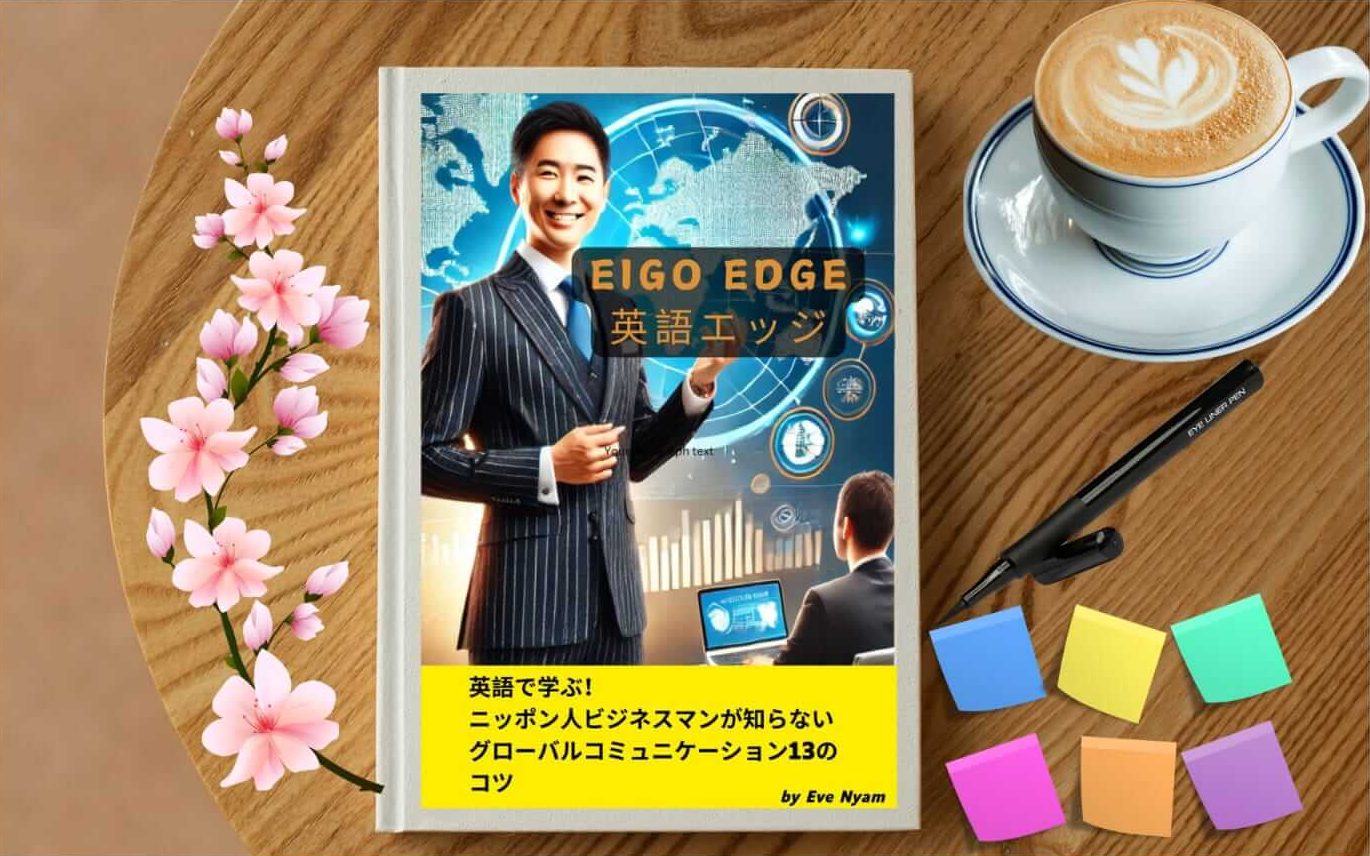
- Buy Eigo Edge: Ready to dive even deeper? Check out Eigo Edge for a comprehensive guide on improving your business English. This book is packed with practical strategies, tips, and exercises that will take your skills to the next level. 📚✨
- Read Related Blog Posts: Keep learning! Our blog has even more resources to help you sharpen your communication skills. From email etiquette to presentation tips, there’s always something new to learn. 📝
- Follow Us on Pinterest: Join our community and stay connected for inspiration, updates, and more content tailored for Japanese professionals striving to excel in business English. 📲💼
You’ve got this! Whether you’re preparing for your next big presentation, negotiating a deal, or simply improving your email skills, these phrases will give you the confidence to speak with clarity and professionalism. Let’s continue this journey together!
Arigato Gozamaisu