

Boost Your English with K-Pop, J-Pop, and Global Trends, Eigo, Business English for Japanese Business Professionals

Boost Your English with K-Pop, J-Pop, and Global Trends for Japanese Professionals

Netflix’s KPop Demon Hunters didn’t just smash streaming records—it smashed cultural barriers!

The action-packed fantasy drama soared to #1 worldwide, captivating fans from Seoul to São Paulo. Meanwhile, across the sea, J-Pop is having its own global boom, climbing playlists and showing that Japanese music is no longer confined to anime openings. From neon Tokyo vibes to digital fashion collabs on TikTok, there’s a cultural storm sweeping the globe.

And here’s the twist: this wave of global pop culture isn’t just entertainment—it’s your secret English teacher.

Think about it. When you’re binging a K-drama, humming along to YOASOBI, or sharing memes about Demon Hunters, you’re not only enjoying the story—you’re absorbing language in real time. The dialogue you hear, the lyrics you repeat, the hashtags you type—each one is a little piece of English sneaking into your memory.

「英語の勉強が退屈だと思ってる?ちょっと待って!」
(Think English study is boring? Hold on a second!)

Learning through pop culture flips the script. No more dull textbooks or endless grammar drills. Instead, your English practice becomes catchy, stylish, and unforgettable. Imagine improving your listening skills with Netflix subtitles, polishing your pronunciation by singing J-Pop choruses, or expanding your vocabulary by reading fan theories online. Culture makes language stick, because it’s tied to emotions, rhythms, and visuals that you already love.

It’s nostalgia too. The 90s City Pop revival has brought songs like Mariya Takeuchi’s Plastic Love back into the spotlight—giving new learners a chance to discover smooth English phrases hidden in retro Japanese lyrics. Add anime classics re-dubbed with crisp translations, and suddenly, yesterday’s nostalgia becomes today’s English lesson.

And let’s not forget the digital fashion revolution. Avatars wearing KPop-inspired outfits in Roblox or Fortnite aren’t just eye candy—they’re vocabulary builders. Words like “aesthetic,” “drop,” “collab,” and “limited edition” aren’t classroom terms, but they’re essential for communicating in global pop culture spaces.

So here’s the point: culture is not a distraction from English study—it’s the bridge. When you binge, dance, or sing, you’re doing more than just being entertained. You’re unlocking a new way to learn, a way that feels alive, relevant, and global.

Welcome to a world where your favorite Netflix series, your J-Pop playlist, and your TikTok feed become your classroom. Let’s explore how to boost your English with K-Pop, J-Pop, and Global Trends as a  Japanese Professional to transform not just the way you learn English—but the way you use it.

Why Pop Culture is the Best English Teacher You Never Asked For

If you ask most professionals in Japan how they studied English, the answers are usually the same: grammar books, long vocabulary lists, maybe a few years of eikaiwa (英会話) lessons. Yet many still feel stuck—comfortable with reading but nervous in conversation, or able to understand meetings but unable to sound natural. Why? Because traditional methods often train you to “study English,” not to live in English.

That’s where pop culture sneaks in.

When you stream a show like KPop Demon Hunters, you’re not just watching cool action sequences—you’re hearing slang, emotions, interruptions, humor, and even silence used in ways textbooks rarely explain. Think about how many times a character says, “You’ve got to be kidding me,” or “Seriously?” These little phrases are the heartbeat of real English communication.

The Stickiness of Songs and Stories

Music has a special power. Scientists call it the “earworm effect”—when a tune sticks in your head for hours. Now imagine that tune is J-Pop or K-Pop with English phrases woven into the lyrics. Without even trying, you memorize not only the melody but the words. 「知らないうちに英語を覚えてる!」 (“Before you know it, you’ve learned English!”).

Lyrics also teach you rhythm and pronunciation. English stress patterns are tricky for Japanese speakers, but singing forces your mouth to move differently. That’s why karaoke isn’t just fun—it’s language training in disguise.

Vocabulary in Action

Pop culture exposes you to living vocabulary. Instead of learning “to collaborate = 協力する” from a dictionary, you see it in a tweet: “New collab dropping next week!” That small difference makes the word memorable, emotional, and useful.

And it’s not only slang. Business terms leak into culture, too. Fashion drops, brand partnerships, even NFT collaborations in the digital fashion world use English vocabulary that is also appearing in global boardrooms. By following trends, you’re preparing yourself for business English without even realizing it.

Community and Real Interaction

Language isn’t just input—it’s output. Fandoms give you a reason to use English, whether it’s tweeting your opinion on a new episode, commenting on YouTube reaction videos, or joining a Discord fan group. Suddenly, English becomes the currency of belonging.

A Japanese business professional may hesitate to speak English in a meeting, but will happily post, “This episode was epic 🔥” on Twitter. That’s still English practice—and it builds confidence step by step.

Breaking the Fear Barrier

Textbooks create pressure to be “correct.” Pop culture creates permission to be expressive. No one in a KPop fan forum cares if your grammar is perfect. They care if you’re excited, funny, or insightful. That freedom lowers the barrier to communication and trains your brain to associate English with fun instead of stress.

「間違えてもいい、伝わればいい。」 (“It’s okay to make mistakes, as long as you get your message across.”) That’s the mindset shift that turns passive learners into active communicators.

English That Matches Emotion

Finally, pop culture teaches you the emotional tone behind words. For example, the difference between “That’s great” (polite) and “That’s awesome!” (excited) isn’t in the dictionary—it’s in the delivery of your favorite character, singer, or influencer. Learning language through emotion makes it stick because your brain connects meaning with feeling.

Case Study 1: KPop Demon Hunters (Netflix #1 Hit)

When KPop Demon Hunters stormed Netflix and became the platform’s #1 most-watched show, it wasn’t just a win for Korean entertainment—it was proof of how far Asian pop culture has gone global. Fans from every corner of the world tuned in for its mix of fantasy, action, and music-inspired storytelling. But here’s the hidden opportunity: shows like this are also incredible tools for learning English.

Why Demon Hunters Took Over the World

The show combines everything that sticks in your memory:

  • Fast-paced action that keeps you glued to the screen.

  • Catchy dialogue filled with emotional punch.

  • Music-driven energy, blending KPop vibes into fantasy storytelling.

  • A fandom culture that explodes on TikTok, Twitter, and YouTube.

That means learners aren’t just passively watching. They’re quoting lines, making memes, singing soundtracks, and debating story theories—in English.

Language Style in the Show

Unlike business English, Demon Hunters uses everyday, high-emotion English. Characters shout, joke, tease, and argue. That’s where learners pick up real communication. For example:

  • “You’ve got to be kidding me.” (冗談でしょう。)

  • “Stay sharp.” (油断するな。)

  • “We don’t have much time.” (時間がないぞ。)

  • “It’s not over yet.” (まだ終わってない。)

These aren’t textbook phrases, but they’re exactly what makes conversation sound natural. Imagine saying “Be careful” vs. “Stay sharp.” Both mean the same, but one sounds like everyday spoken English.

Subtitles: Your Secret Study Weapon

Many Japanese fans watch Demon Hunters with dual subtitles—Korean/English, or English/Japanese. This is one of the fastest ways to absorb vocabulary. Your eyes see the Japanese, your ears hear the English, and your brain starts connecting them naturally.

Try this: watch one episode with Japanese subtitles, then rewatch with English subtitles only. You’ll be surprised how much sticks.

「同じエピソードを2回見ると、英語がどんどん耳に入ってくる!」
(When you watch the same episode twice, the English sinks in more and more!)

Fandom English: Practice Without Pressure

Here’s where it gets fun. The global fandom communicates in English—even if it’s not their first language. On Twitter, you’ll see comments like:

  • “That fight scene was epic 🔥”

  • “I can’t wait for season 2!!”

  • “Best OST ever, no cap.”

Notice the slang? Words like “epic” (最高), “no cap” (本当だよ), and abbreviations like “OST” (Original Soundtrack) are part of the cultural English you’ll never find in a school textbook. By joining these online discussions, Japanese professionals can practice English in a low-stress, social way.

Mini Vocabulary Box: KPop Demon Hunters Edition

English PhraseJapanese MeaningUsage Context
“Stay sharp.”油断するなWarning a teammate before battle
“You nailed it.”うまくやったねPraising success
“That was epic.”最高だったReacting to an amazing scene
“No cap.”本当だよ/ガチでSlang for “I’m serious”
“I’m shook.”驚いた/びっくりしたExpressing surprise

Adding just a handful of phrases like these into your daily speech can instantly make you sound more natural. Imagine using “You nailed it” in a business meeting instead of “Good job.” It feels fresher, more global, and more connected to modern English.

Confidence Through Entertainment

The brilliance of learning from a show like Demon Hunters is that you want to keep going. Unlike a textbook, you don’t need motivation to press “next episode.” And every time you do, you get another 40 minutes of natural English input.

It’s also emotionally powerful. When you’re on the edge of your seat during a battle, the English phrases you hear in that moment stick deeper. Psychologists call this “emotional anchoring”—we remember language better when it’s tied to excitement, fear, or joy.

Takeaway: Demon Hunters as a Business English Tool

At first glance, KPop Demon Hunters has nothing to do with boardrooms or presentations. But here’s the secret: every phrase you pick up in a fun context becomes fuel for professional contexts.

For example:

  • “Stay sharp” → can be used in project management.

  • “You nailed it” → perfect praise in a team setting.

  • “We don’t have much time” → fits just as well in a client meeting as it does in a battle scene.

By learning through entertainment, Japanese professionals can access authentic, modern English that goes beyond stiff textbook phrases.

Case Study 2: The Global J-Pop Boom

For years, when people outside Japan thought of J-Pop, they immediately linked it to anime openings or quirky idol groups. But in the 2020s, something shifted. J-Pop began to break out of its niche and gain recognition on global charts. Artists like YOASOBI, King & Prince, and Aimyon are showing international audiences that Japanese music is as diverse, emotional, and innovative as K-Pop.

Why J-Pop Is Rising Globally

Several forces are driving this new wave:

  • Streaming platforms (Spotify, Apple Music, YouTube) making J-Pop instantly accessible worldwide.

  • Anime soundtracks turning into viral hits (think YOASOBI’s Idol from Oshi no Ko).

  • City Pop revival, with 80s tracks like Mariya Takeuchi’s Plastic Love gaining new life through TikTok and YouTube.

  • Hybrid lyrics mixing Japanese and English, making songs easier to connect with globally.

This global boom means J-Pop is no longer “Japan’s secret.” It’s becoming a shared soundtrack for fans around the world—and with it, a chance for Japanese learners to see how their own culture can be a gateway into mastering English.

Lyrics as an English Classroom

J-Pop often weaves English phrases into lyrics. Sometimes it’s a single catchy line (“I need you, I want you”), other times it’s full choruses in English. For learners, this is golden:

  • English is reinforced with melody and rhythm.

  • The blend of English and Japanese makes comprehension natural.

  • Pronunciation is practiced in a fun, memorable way.

For example, YOASOBI’s Idol includes the line:
“You are perfect, darling, darling.”
Simple, yes, but repeating it with music helps lock in rhythm and stress patterns of English speech.

「歌うことで、英語の発音が自然に良くなる。」
(When you sing, your English pronunciation improves naturally.)

Emotional Vocabulary

J-Pop lyrics also emphasize emotion—love, longing, nostalgia, ambition. These emotional words are exactly what learners need to make their English sound alive. Compare these common textbook phrases with J-Pop-inspired upgrades:

  • Textbook: “I am sad.” → J-Pop: “My heart is breaking.” (心が壊れそう)

  • Textbook: “I am happy.” → J-Pop: “I feel alive tonight.” (今夜、生きていると感じる)

  • Textbook: “I love you.” → J-Pop: “I can’t live without you.” (君なしじゃ生きられない)

These richer, expressive phrases are the ones professionals need in business too—because business communication isn’t only about facts; it’s about persuasion and emotion.

Nostalgia and City Pop

The global revival of City Pop shows how nostalgia powers language learning. Non-Japanese fans are memorizing lyrics to Plastic Love or Tatsuro Yamashita’s tracks, even when the English is minimal. Why? Because the songs carry emotion and atmosphere. And for Japanese professionals, hearing English woven into retro hits can bring confidence: “We’ve been singing English for decades—it’s already part of our culture.”

Mini Vocabulary Box: J-Pop Edition

English PhraseJapanese MeaningUsage Context
“My heart is breaking.”心が壊れそうExpressing sadness
“I feel alive tonight.”今夜、生きていると感じるExpressing joy/excitement
“Can’t live without you.”君なしじゃ生きられないStrong love/attachment
“Dreaming of tomorrow.”明日を夢見ているHopeful, future-oriented
“Stay with me.”そばにいてDesire for closeness

Using these phrases outside music—whether in casual conversation or even business small talk—makes English sound more authentic and less robotic. Imagine a Japanese executive telling a colleague after a successful project: “Our team felt alive tonight.” It communicates energy in a way “We worked hard today” doesn’t.

Pronunciation Training Through Song

One of the toughest challenges for Japanese learners is the R/L sound difference. Singing J-Pop songs with English words forces practice. Lyrics like “Stay with me” or “Ready for love” are mini pronunciation lessons. Singing also improves intonation—the melody pushes learners to rise and fall with the natural rhythm of English.

Fandom and Global Networking

Like K-Pop, J-Pop fandom is global. Fans comment in English on YouTube videos, translate lyrics on forums, and discuss songs on Reddit. This means Japanese professionals can jump into discussions about their own music—a natural confidence booster. Instead of being a learner in someone else’s culture, they become a culture ambassador while practicing English.

「J-Popを通じて、あなたは英語を学ぶだけでなく、日本文化の代表にもなれる。」
(Through J-Pop, you’re not only learning English—you’re also representing Japanese culture.)

Takeaway: J-Pop for Business English

On the surface, singing along to J-Pop might seem far from business relevance. But think again:

  • Emotional vocabulary improves presentations and negotiations.

  • Pronunciation practice makes speech clearer in meetings.

  • Cultural confidence builds charisma in global settings.

In short, J-Pop gives Japanese professionals a playful yet powerful tool to transform English learning into something personal, emotional, and effective.

Digital Fashion, Memes & the Vocabulary of Today’s Internet

If K-Pop and J-Pop give us the soundtracks, then memes and digital fashion give us the visual language of global culture. These days, English isn’t just in textbooks—it’s in your feed, your game skins, your TikTok captions. And whether you’re laughing at a meme or buying the latest digital sneakers for your avatar, you’re learning how English lives and breathes in 2025.

Memes: Mini-Lessons in Modern English

Think about the last time you saw a meme. Short, funny, a few words—but instantly understood. That’s because memes rely on shared cultural references, slang, and humor.

Examples:

  • “It’s giving…” → A slang phrase meaning “this has the vibe of.”

  • “No cap” → Meaning “no lie” or “seriously.”

  • “Rizz” → Short for “charisma,” popularized on TikTok.

For an English learner, memes are like flashcards for modern slang—but way more fun. Each time you see one, you’re learning not only the vocabulary, but also how humor works in English.

👉 Quick tip: Save memes with English captions, look up words you don’t know, and then try making your own. It’s creative, cultural learning.

Digital Fashion & The New Vocabulary of Style

The metaverse, gaming platforms, and digital fashion are creating entirely new industries—and new English terms. Phrases like “drop a skin,” “NFT outfit,” or “drip check” are normal in Gen Z English.

For Japanese professionals in global industries like gaming, entertainment, or fashion, knowing these terms signals that you’re plugged into the future. It’s not about looking “cool” (though it helps!)—it’s about communication in industries that are increasingly borderless.

For example:

  • “Drip” → slang for stylish clothing.

  • “Skin” → an avatar outfit in games like Fortnite.

  • “Fit” → shorthand for “outfit.”

Even if you’re not a gamer, understanding these words makes you fluent in the way younger global professionals talk about trends.

Internet Slang & Professional Crossover

Here’s the surprising thing: today’s internet slang often crosses into business communication. Terms like “viral,” “trending,” or “collab” started in online communities but are now standard in boardrooms.

Imagine being in a marketing meeting and hearing:

  • “We need this campaign to go viral.”

  • “This is a perfect collab opportunity.”

If you only studied “formal” English, these words might confuse you. But if you’ve been paying attention to online culture, you’ll understand—and maybe even contribute with confidence.

Why This Matters for English Learners

English is not frozen. It evolves with culture. By connecting with memes, fashion, and online trends, you’re not just memorizing static vocabulary—you’re living inside the language as it grows.

As one Japanese learner told me:
「教科書からじゃなくて、TikTokから“英語”を学んでる気がする。」
(“It feels like I’m learning English from TikTok, not from a textbook.”)

And honestly—that’s the point. Culture is the engine that keeps language alive.


✨ Smooth transition: In the next section, we’ll see how anime, gaming, and streaming communities have become full-blown English classrooms where you can chat, debate, and even negotiate across borders.

Boost Your English with K-Pop, J-Pop, and Global Trends, Business English, Japanese Business Professionals, Eigo

Anime, Gaming & Streaming as English Classrooms

When you think about learning English, you might imagine a classroom, textbooks, or long grammar drills. But in 2025, the real classrooms are happening on Twitch, in Discord servers, and inside anime fan communities. Anime, gaming, and live streaming are more than just entertainment—they’re social English laboratories.

Anime: More Than Subtitles

Anime has always been a gateway for global fans into Japanese culture. But here’s the twist: anime also creates bridges into English.

  • Sub vs. Dub Debate → Fans worldwide argue (in English!) about whether anime is better with subtitles (sub) or English voice actors (dub). This sparks vocabulary like “authentic,” “localization,” or “character development.”

  • Fan Subs & Reviews → Many fans write English reviews, summaries, and reactions. Reading or writing these helps learners develop descriptive vocabulary.

  • Cosplay & Conventions → At global anime cons, English is often the default language. Japanese fans who cosplay abroad often practice their “presentation English” here without even realizing it.

Example:
「アニメを楽しむ時、字幕だけじゃなくて、世界中のファンと英語で話してる自分がいる。」
(“When I enjoy anime, it’s not just about the subtitles—I find myself talking to fans around the world in English.”)

Gaming: English as the Default Language of Play

Step into any global game—League of Legends, Fortnite, Final Fantasy XIV—and chances are, the chat is in English. Not because players are native speakers, but because English is the shared survival tool.

  • “GG” (good game) → sportsmanship.

  • “AFK” (away from keyboard) → gaming shorthand.

  • “OP” (overpowered) → describing a too-strong character.

Every match is a lesson. You’re learning teamwork vocabulary, persuasion (“Let’s go left flank!”), and even negotiation (“I’ll trade this item if you share your potions”).

For business professionals, this might sound like just fun—but it’s actually high-level communication practice. You’re collaborating, problem-solving, and persuading under pressure—exactly what you need in global meetings.

Streaming: Real-Time English Practice

Platforms like Twitch and YouTube Live create direct, unfiltered English environments. A Japanese learner watching a K-Pop gamer streaming in English isn’t just a passive viewer. You can:

  • Join the chat → practice casual writing.

  • Donate with a message → practice short, impactful sentences.

  • Collaborate with streamers → practice “micro-networking” in English.

And because chat moves fast, you’re forced to think in real time—an amazing way to break the habit of over-translating in your head.

The Social Layer = The Secret Ingredient

Here’s why anime, gaming, and streaming are so powerful for English learners: they come with community. When you’re in a Discord group, Reddit thread, or live chat, you’re not studying—you’re living English socially.

In fact, studies show people retain vocabulary better when it’s linked to strong emotions. Think about it: you’re more likely to remember “Watch out!” if you heard it right before your team lost in Fortnite, compared to if you saw it in a textbook.

Why Japanese Professionals Should Pay Attention

Anime and gaming communities aren’t just for teenagers. Many global industries—from tech to marketing—use the same language, references, and humor. If you can participate comfortably in these pop culture spaces, you’ll naturally become more confident in cross-cultural workplaces.

Example:

  • At an international pitch, dropping a subtle anime reference might spark connection with overseas clients.

  • Understanding gaming metaphors (“leveling up,” “boss fight”) helps when those same metaphors show up in leadership talks.

👉 In short: Anime, gaming, and streaming don’t just help you understand English. They help you use English to connect.

Nostalgia & Retro Culture as Memory Boosters for English

Have you ever noticed how certain songs from your childhood never leave your head? Maybe it’s Utada Hikaru’s “First Love” or the Pokémon theme song. Nostalgia isn’t just a sweet feeling—it’s a memory superpower. When applied to language learning, it helps anchor English words and phrases more deeply into long-term memory.

Why Nostalgia Works in Learning

Science shows that nostalgia activates emotional centers in the brain, making us more likely to recall details tied to those emotions. For English learners, that means:

  • Recalling lyrics, lines, or phrases linked to past joy.

  • Stronger retention when English learning is tied to personal or cultural memories.

  • Easier recall under stress, since nostalgia provides comfort and familiarity.

Example: If you grew up playing Street Fighter or Final Fantasy, you probably already know words like “fight,” “select,” or “continue.” These may seem small, but they create foundational vocabulary.

Retro J-Pop & K-Pop as English Teachers

The global boom of J-Pop and K-Pop isn’t new—it’s a revival of decades of music that shaped fans’ youth. Classic lyrics, even simple English phrases like “I love you,” “Baby,” or “Forever” in 90s songs, gave many learners their first English experiences.

  • Case Study: Many Japanese professionals still recall learning their first English phrases from Namie Amuro’s songs or Hikaru Utada’s English lines.

  • K-Pop Example: Early H.O.T. and BoA tracks mixed Korean, Japanese, and English, giving listeners code-switching practice before it was even called that.

Anime & Retro Shows = English Vocabulary Time Capsules

Think about Dragon Ball Z, Sailor Moon, or Naruto. International fans often watched with subtitles or dubs, absorbing not only storylines but also conversational English. Even if you didn’t intend to study, you picked up useful everyday words like “hurry,” “wait,” “power,” “friendship,” or “destiny.”

Japanese professionals today can revisit these same shows as an English learning hack. Why? Because you already know the story. Your brain won’t struggle with plot comprehension—it can focus fully on vocabulary, phrasing, and nuance.

Retro Gaming English

Classic games like Pokémon Red/Blue, The Legend of Zelda, and Final Fantasy taught generations of players simple but powerful English. Commands like “attack,” “save,” “quit,” “item,” or even storyline text helped build natural familiarity with verbs and nouns.

When modern learners replay these classics in English (instead of Japanese), nostalgia turns them into perfect memory boosters.

「昔のアニメやゲームをもう一度英語で楽しんでみると、自然にボキャブラリーが増えるんだ。」
(“When you revisit old anime or games in English, your vocabulary grows naturally.”)

Pop Culture Throwbacks in the Workplace

It might sound surprising, but nostalgia-driven English even shows up in business. Global professionals often bond over retro pop culture. Phrases like “It’s like Pokémon evolution,” or “We need a Sailor Moon-level transformation” pop up in creative industries. Knowing these references gives Japanese professionals an edge—it signals cultural fluency, not just language ability.

Nostalgia as Confidence Fuel

Finally, nostalgia reduces stress. English learners often freeze up in high-pressure moments. But when English is tied to something comforting—like the theme song of your favorite anime—you feel more relaxed, making communication smoother.


👉 Transition: Nostalgia looks backward, but the next big step is looking forward—into digital fashion, virtual idols, and AI-driven pop culture. In the final section, we’ll explore how futuristic trends are reshaping English communication and how Japanese professionals can ride that wave.

Digital Fashion, Virtual Idols & AI Pop Culture: The Future of English Learning

If nostalgia gives us comfort, the future gives us challenge. Today, English learning isn’t confined to classrooms or textbooks—it’s happening in digital runways, AI-powered concerts, and the worlds of virtual idols. Pop culture is no longer just music or movies. It’s interactive, immersive, and global—and English sits at the center of it all.

Digital Fashion: The New Vocabulary Runway

Fashion is no longer only about clothes you can touch. In 2025, digital fashion—clothes designed for avatars, games, and AR/VR platforms—is a billion-dollar industry. Global brands like Nike, Gucci, and Louis Vuitton are releasing digital collections that are marketed in English.

For learners, this creates a new type of vocabulary:

  • Tech-Style English: “skins,” “filters,” “drops,” “NFT wearables.”

  • Marketing English: Brands use catchy, minimalist English slogans to appeal globally.

  • Community English: Online fashion communities mix slang, professional vocabulary, and creativity.

Japanese professionals who understand this language of digital fashion can not only learn English, but also gain an edge in industries like tech, marketing, and branding.

「ファッションはもう服だけじゃない。言葉もスタイルの一部なんだ。」
(“Fashion is no longer just about clothes. Words are also part of the style.”)

Virtual Idols & AI Performers

Japan already pioneered virtual idols like Hatsune Miku, but the trend has gone global. In 2025, AI idols are singing in multiple languages, streaming on TikTok, and collaborating with real human stars. English is the glue that allows these performers to reach international fans.

For learners, following virtual idols is a chance to:

  • Pick up modern slang and “net-speak” in English.

  • Join global fan discussions (on Reddit, Discord, or X/Twitter).

  • Experience English lyrics that are often written to resonate with worldwide audiences.

AI Pop Culture: Where Fans Become Creators

AI tools now allow anyone to remix, rewrite, or even generate new songs, fashion designs, and anime plots. This democratization of pop culture means English is no longer just input—it’s output.

  • Writing prompts in English to get the best AI art.

  • Using English hashtags to join global culture conversations.

  • Collaborating on AI-powered fan fiction or music videos where English is the common language.

This future-oriented creativity requires learners to actively produce English, not just consume it—turning them into confident communicators.

Why This Matters for Japanese Business Professionals

For business, the future is already here. Companies are experimenting with:

  • Metaverse Meetings where English dominates.

  • AI Brand Campaigns with English slogans.

  • Cross-Cultural Marketing driven by pop culture trends.

If Japanese professionals can navigate English in these futuristic contexts, they’ll be prepared for a global stage where innovation and culture merge.

From Nostalgia to the Future: A Full Circle

Think about it: you start with retro anime vocabulary, level up through K-Pop lyrics, sharpen your skills in gaming chats, and now—engage in futuristic, AI-powered pop culture. Every step builds your English not through study, but through experience.

English stops being a subject. It becomes a lifestyle.

Boost Your English with K-Pop, J-Pop, and Global Trends for Japanese Professionals, Eigo, Business English Global pop culture isn’t slowing down—it’s accelerating. If you want to thrive in this new world, your English needs to move with it. Don’t just watch K-Pop Demon Hunters or stream J-Pop hits—use them as your secret training ground.

👉 Start today by checking out our business phrases for professionals. It’s packed with polished business expressions you can actually use, inspired by the same cultural forces shaping today’s global stage.

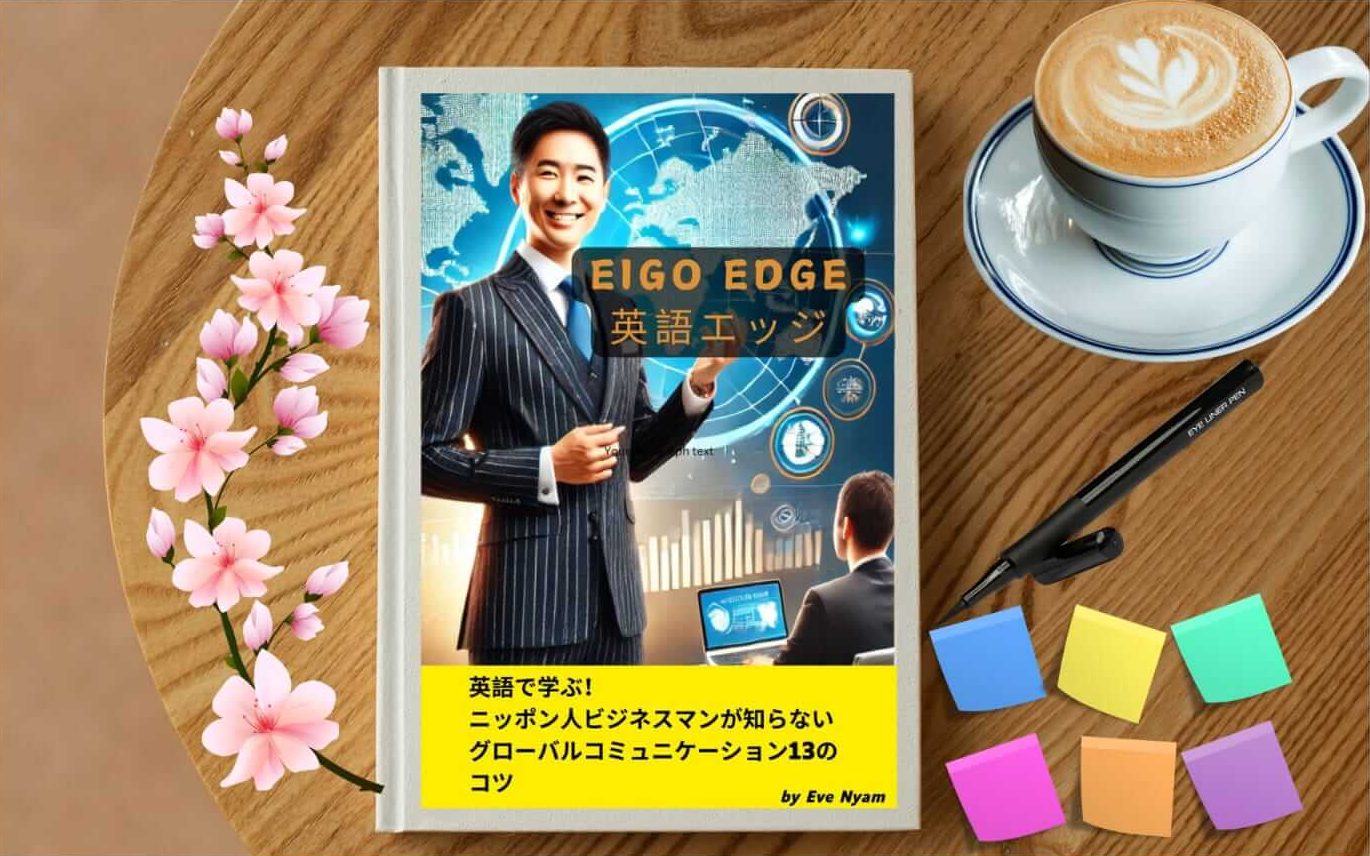
📘 And if you’re ready to level up further, check out my book

Eigo Edge : 英語で学ぶ! ニッポン人ビジネスマンが知らない グローバルコミュニケーション13のコツ 

 It’s designed to take you from “fluent enough” to truly global.

Remember to subscribe to our newsletter at the bottom of this page, we have so much more in store for you!

「今がチャンス!文化を楽しみながら、英語を磨こう。」
(“Now is your chance! Enjoy the culture, and polish your English at the same time.”)
Leave a Comment

Your email address will not be published. Required fields are marked *